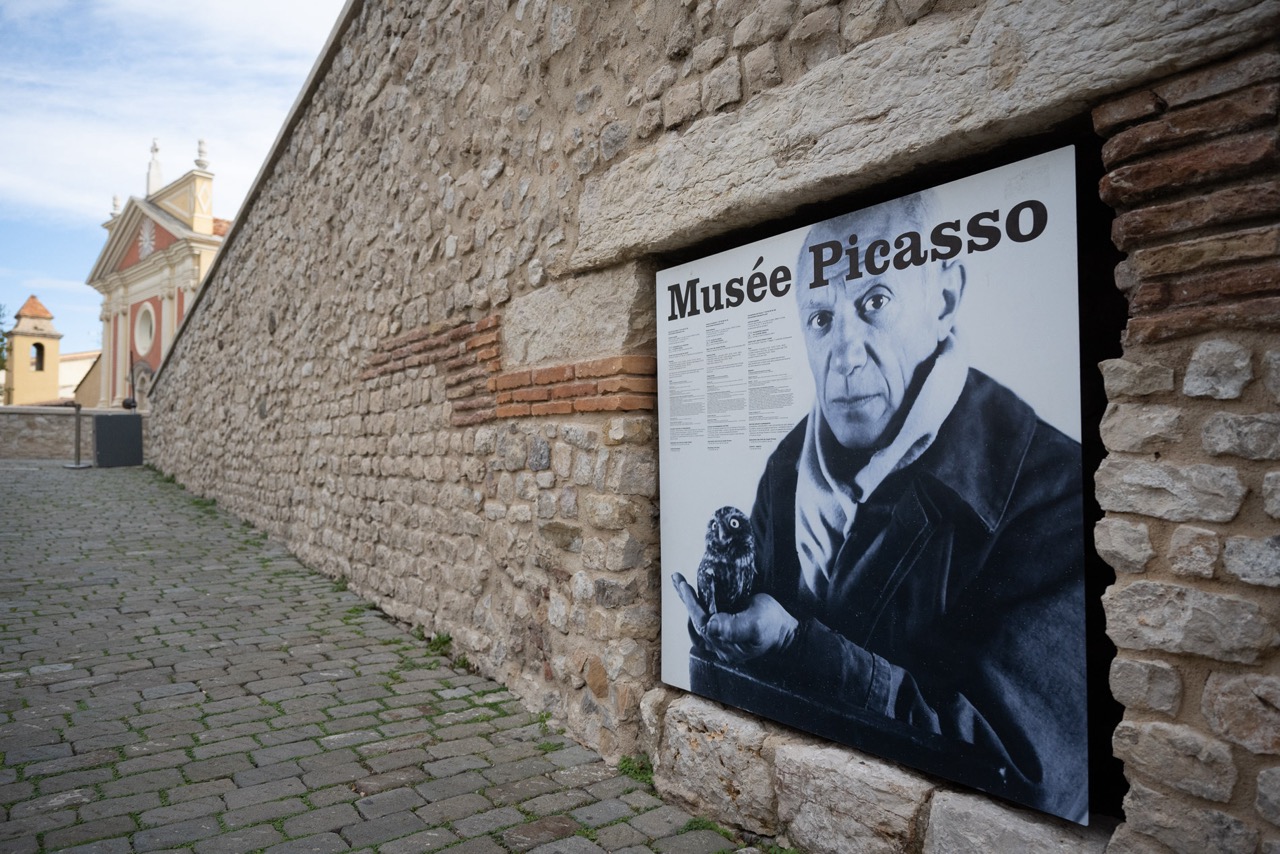
Report by Françoise Spiekermeier
A stroll in the south: the Picasso Route in Provence
Impromptu workshops in seaside villas, frescoes or antics on walls, forever erased... Picasso dotted his path in Provence with traces, as if to better follow him. Discover Picasso in Provence, while the Centre Pompidou presents a gigantic exhibition of the master's abundant drawings, "Picasso. Dessiner à l'infini", in collaboration with the Musée National Picasso to mark the 50th anniversary of his death, with over 1,000 works on display.
At the end of the vacations, how many paintings did he cover with white in the bedrooms and living rooms he lived in for a summer? On this tour of Privence, which follows the Picasso route, we discover the everyday life that provides the material for his work. Picasso loved this Provence, walking his brushes and fingers from the harbors to the heights, never taking his eyes off the sea. A multitude of media captured his attention. Transmuted from the ordinary to the sublime, they shine with a thousand lights, fifty summers after the genius' death. From villages to ports, Mougins, Vallauris, Antibes, Juan les Pins, Picasso's passion is more vibrant than ever!
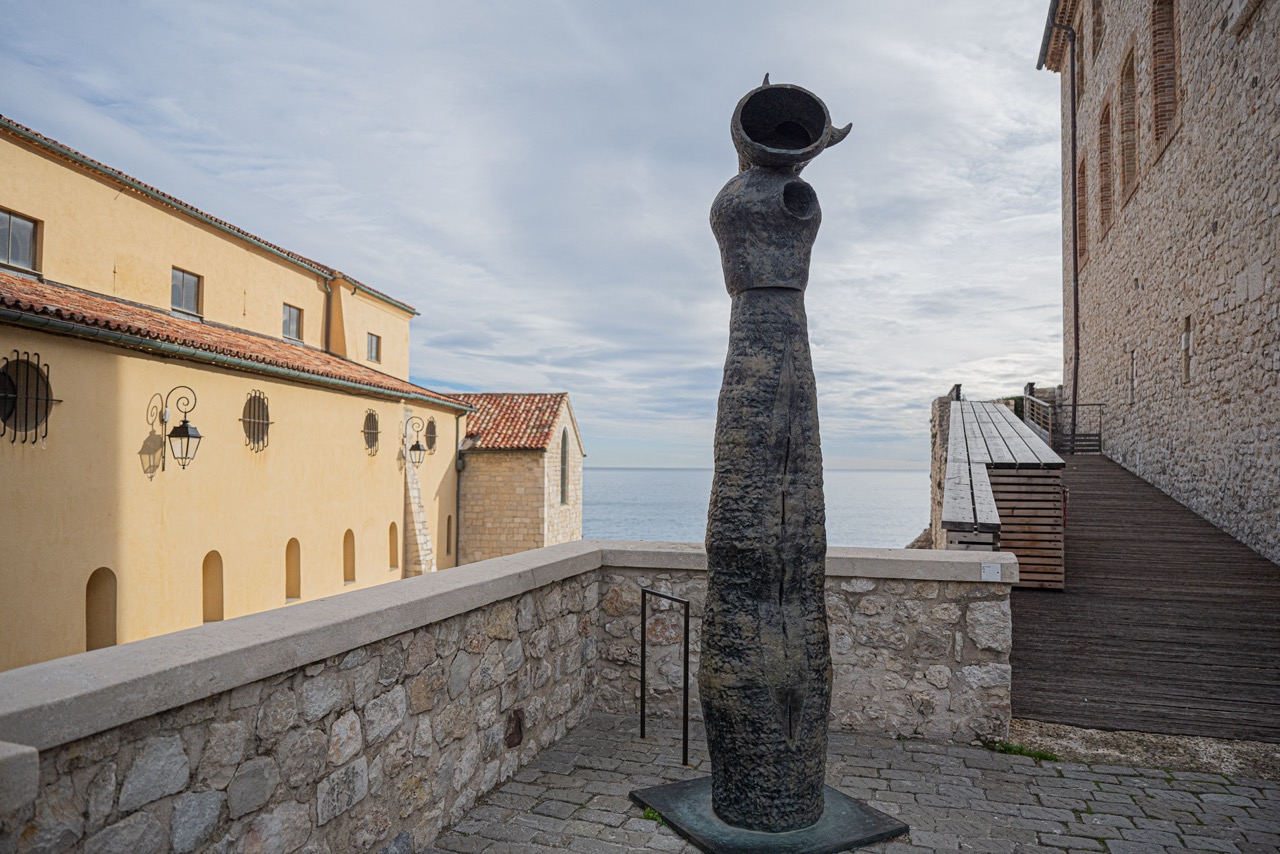
ANTIBES, the Picasso Museum or the art of recycling.
Antibes is the gateway to travel. Since the early 20s, Picasso has spent the heyday of 1923, 1924 and 1925 in Antibes. Thereafter, he would return again and again, haunting the surrounding hills.
To get to the Musée Picasso, housed in the Château Grimaldi overlooking the Mediterranean, you can either walk along the seafront, or take the Cours Massena through the covered Provencal market. Once you've reached the foot of the château, the ramp allows you to admire the Chapelle Saint-Esprit d'Antibes below.
When Picasso visited Antibes in 1924, the château had been abandoned by its garrison. Pablo dreamed of buying it, but the commune acquired it to house a museum of art and history.
A walk in Provnece: THE PICASSO MUSEUM
In the summer of '46, just after the war, Picasso - famous at the age of 65 - returned with Françoise Gilot, a young artist who had become his companion. He met a photographer, Pierre Sima, to whom he confided: "I've always wanted to be given large surfaces to decorate, and the State has never given me any". Pleading his case with Dor de la Souchère, curator and founder of the Grimaldi Museum, he obtained a residency of several months in the second-floor room. He was provided with everything he needed: easels, a table, a mattress to rest on, brushes and paints. The painter tied the key to his den to his belt with a string. Until mid-November, the couple's life is organized between the beach in the morning, lunches with friends, then the siesta. They come to the workshop around mid-afternoon and stay late into the night, thanks to the cinema projectors Michel Sima has purchased from the
Victorine studios in Nice. Local shipyards and boatbuilders become his suppliers, from whom he collects large panels of fibrocement, wood and industrial paint (ripolin). He then paints on the walls. Or he recycles paintings lying around the museum, covering up the original work, such as this portrait of a soldier in uniform that has become "Le gobeur d'oursins" ("The sea urchin gobbler").
No more war, confinement and anguish! In Antibes, life takes off again. He paints victuals, abundance, food: "Nature morte à la bouteille, à la sole et à l'aiguière" (Still life with bottle, sole and ewer), in the style of a religious still life, is like an offering. Françoise Gilot tells him she is pregnant. He celebrated the event with a painting on fiber cement: "La Joie de vivre", an ode to Françoise, who dances in the center of the composition with a tambourine, surrounded by mythological creatures. He produced 23 paintings, which he left in trust, as well as 44 drawings: the "Picasso Room", officially inaugurated on September 22, 1947, became the Musée Picasso in 1966, after a prestigious gift from Picasso, complemented by a collection of 78 ceramics. Picasso's 1946 residency continued for several years as an "intermittent permanence" in a dedicated studio. It was one of the most productive ever. The Picasso Museum is an adventure in which you enter.
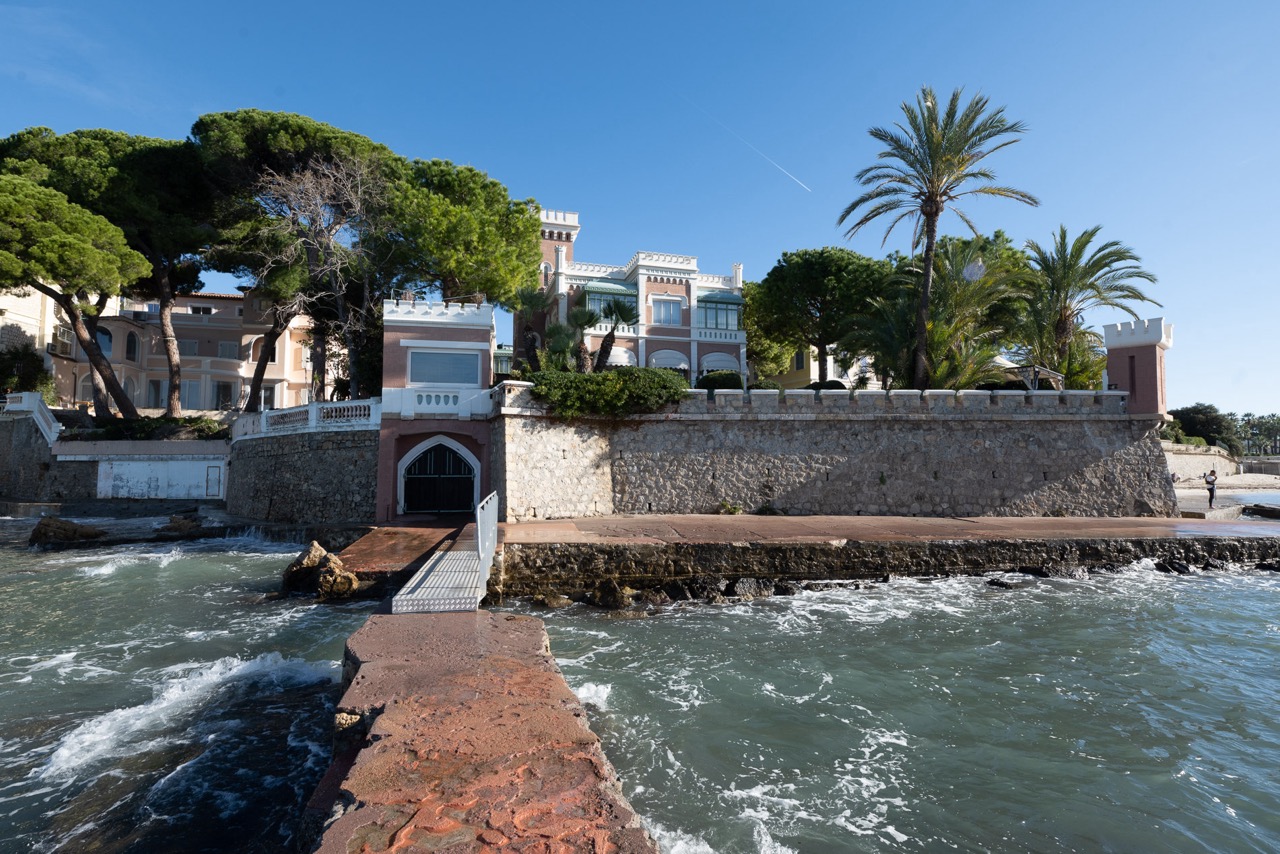
JUAN LES PINS, the erased work of art
6 km from the Picasso Museum, at 30-37 boulevard Edouard-Baudouin, a villa once owned by American billionaires and writer F. Scott Fitzgerald has missed its vocation. La Vigie, a sumptuous waterfront property built in 1912 by architect Lucien Stable - to be sold for 27 million euros in 2022 - was Picasso's den in the summer of 1924. Here, he painted several oil canvases, some inspired by the architecture of the house with its iconic turret. The façade and tower of the house can be admired from the coastal path or from the boulevard. The villa has eight bedrooms where Picasso painted frescoes. During his stay, he also painted the walls of the living rooms. However, following a complaint from the owner, he had to erase everything, thus avoiding the creation of the Master's first museum!
VALLAURIS, the Museum of War and Peace
We head inland to the village of Vallauris, the traditional venue for the annual potters' exhibition, which marked a new period in the evolution of the work: that of the discovery of ceramics. In the center of the village, the church square has become the site of "L'Homme au mouton", a bronze sculpture enthroned on its pedestal, donated to the town in 1949. It is one of the few works to occupy public space, Picasso having wanted it to be climbable by children. After meeting the owners of a ceramics factory, the Madoura workshop, and carrying out his first conclusive tests, Picasso fell in love with this activity, which offered him new creative perspectives: the malleability of clay and the magic of kiln firing, which revealed the brilliant colors of glazes and the brilliance of varnishes. He settled in Vallauris in 1948 and returned to painting in 1952, decorating the Chapelle du Prieuré de Vallauris with a fresco, La Guerre et La Paix: two monumental compositions measuring over 100 m2 on isorel panels that follow the shape of the vault. After Guernica in 1937, and Massacre in Korea in 1951, this was Picasso's latest demonstration of his commitment to peace (particularly in the congresses organized by the Communist Party, for which he designed La Colombe, soon to be reproduced worldwide).
War, mounted on an antique chariot and led by sinister horses, unfurls its procession of misfortunes before being stopped by Justice armed with a shield adorned with a dove. La Paix combines a tightrope-walking figure expressing its fragile equilibrium, a Pegasus, a dance of young girls and, under an orange tree, a family enjoying calm happiness under the sun. The body of the Château de Vallauris houses the Musée de la Céramique, where you can admire the variety of his creations: vases, owls and plates "for eating on", destined for mass reproduction.
MOUGINS la longue et belle vie.
During this drive through Provence, you will find that Route D 135 winds through the countryside to reach the hilltop village of Mougins. You feel closer to the sky. At the entrance to the village, on the left, a red house under a large pine tree dominates the valley with a breathtaking view of the sea. This is the Hôtel Vaste Horizon. It welcomed Pablo Picasso during the summers of 1936, 1937, and 1938. He had just met the talented fashion photographer Dora Maar: for them, summer was a celebration, with a group of friends invited: Nush and Paul Eluard, the writer Roland Penrose and the photographer Lee Miller, the artist Man Ray... Summer after summer, they filled the place with joie de vivre and covered the walls with frescoes that were not to the owner's taste, who had them removed. The art of graffiti was born but not yet recognized! A stone's throw from the hotel, climbing up into the village, there it is, scanning the horizon: a monumental bust of Pablo on the Place des Patriotes: 2.40 m high, 1.60 m wide, created by Gabriel Sterck. A small reproduction can be found at the Musée d'Art Classique de Mougins, a private museum with an interesting collection of Picasso's works, as well as a stunning portrait of him by Françoise Gilot. Scattered among splendid pieces of Greek and Egyptian antiquities, several engravings from the famous Suite Vollard, which are not to be missed, can be admired. But the highlight of the trip is a little further away, on the way to a chapel, Notre-Dame de Vie. Bordered by a hedge of centuries-old cypress trees, families from the region came here to have their stillborn children baptized. People from all over the world came to admire it: Rostropovich, Churchill, Rubinstein, Chaplin, Cocteau. But Picasso was the only one to purchase the Mas Notre-Dame de Vie, located on the lower terrace. This stone house is known as the Château de Vie. Picasso moved there in 1961 with his last wife, Jacqueline Roque, and lived there until his death on April 8, 1973. With 800 square meters and 35 rooms, it became the immense studio of the most prolific period of his life. It was also a museum, where he accumulated all the works he collected. Its new owner since 2017, Rayo Withanage, has decided to honor the "Château de Vie" and its role in art history by transforming it into a " global center for art production with an investment of £100 million." Artists from around the world will be invited to take over Picasso's studio to help enrich contemporary art, in the very place where Picasso created works whose cumulative sales have been estimated at almost €4 billion. An investment in the long life of art.
The Luberon route
And if you feel like it, drive to the Lubéron to visit Dora Maar's house in the beautiful village of Ménerbes. The ideal surrealist woman, loved by Picasso, to whom he offered this house from which she never left... A collection of drawings, poems and paintings, found by chance at an auction, open a new window on Dora Maar's inner life: her parents, her friends, her cat, Picasso, her relationship with faith. And her moped.
As for the "Master", he was laid to rest in Vauvenargues near Aix-en-Provence, close to his only master: Paul Cézanne, and his Montagne Sainte-Victoire.
What to see on your Picasso route in Provence
ANTIBES, Musée National Picasso: exhibition "Picasso 1969-1972. The end of the beginning, at the Musée National Picasso d'Antibes until July 2, 2023
Vallauris: Picasso exhibition "Formes et métamorphoses, la création céramique de Picasso" at the Musée Magnelli- Musée de la Céramique in the priory known as the "château" in Vallauris from May 6 to October 30, 2023
Mougins: Picasso vu par les Autres exhibition, April 6-September 30, 2023 https://www.mouginsmusee.com/fr
Ménerbes: Miracle, Secrets d'atelier de Dora Maar exhibition from June 17 to November 30, 2023 at La Maison Dora Maar
Dora Maar House


