Report by Françoise Spiekermeier
Escape on the Nile in Egypt
From Luxor to Aswan, under the wing of the goddess Isis
The Nile invites you to glide southwards towards its source. 600 km upstream from the pyramids, its only loop is said to be the cradle of the Pharaohs' civilization. This is the domain of temples built on the edge of the desert and royal tombs dug deep into the mountains overlooking the river snake. This is where the goddess Isis lived in perfect adoration for over five thousand years. Admired and venerated as a symbol of feminine omnipotence, the Pharaohs built the most refined monuments of art and architecture in her name. Absolute goddess, Isis is the golden thread of this journey from Luxor to Aswan.
LOUXOR
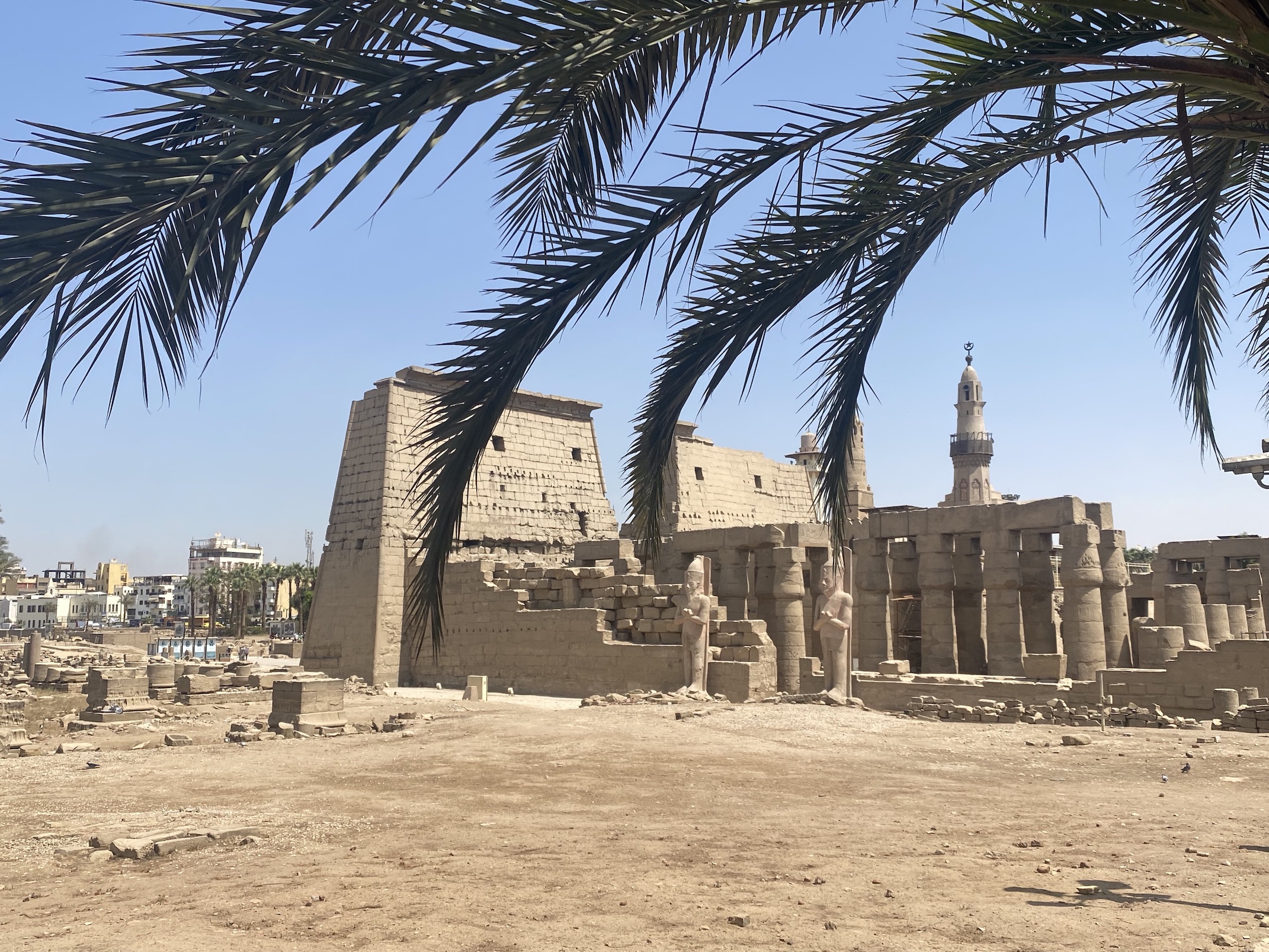
Luxor - the luxurious, golden Thebes of the time of Ramses II - stretches lasciviously along the east bank of the river. East-West, life-death, positive-negative: here, the world can be read in terms of complementary polarities. Cosmopolitan, hyperactive, Luxor and its minarets look out over the other bank, asleep, covered with flooded, fertile fields, where green wheat grows at the edge of the Libyan desert. The plants draw their dazzling vigour from the silt that has accumulated over the centuries to a depth of several metres. One of the Pharaohs' main preoccupations was the abundance of crops, which depended on the availability of water. The success of their reign, their wealth and their eternal posterity, as well as the longevity of their civilization, whose cradle it was, depended on the Nile's flooding. Abandoning the pyramids, the pharaohs came here, on the west bank of the sacred river, to bury their tombs filled with gold and treasures, the bare essentials for a comfort worthy of the afterlife.
The Nile, highway of the gods
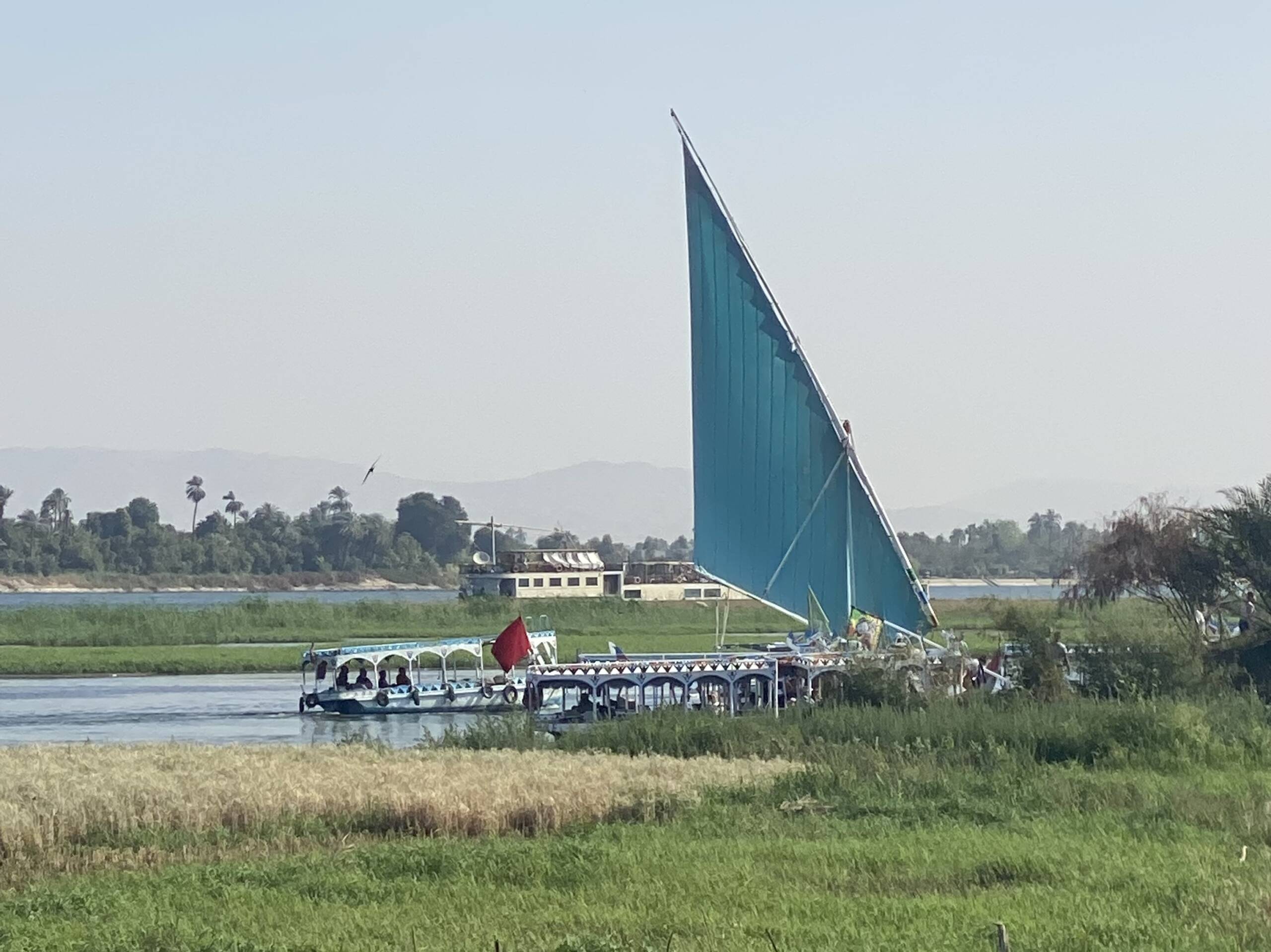
The Nile, the highway of the gods. The Nile reached its highest level after the summer rains that drenched Ethiopia and Sudan upstream. Its annual flood would push back the land, inundating an entire network of canals linking temples built on dry land to the river's course. An immense lake was formed, and the canals flooded, releasing the gods from their monotonous sojourn in the depths of flame-lit sanctuaries... Finally, they left the naos (their tabernacle) to return to the sunlight. Carried on their sacred boats covered in gold and flowers, the gods suddenly moved from temple to temple, covering miles to reach the home of their beloved. ...
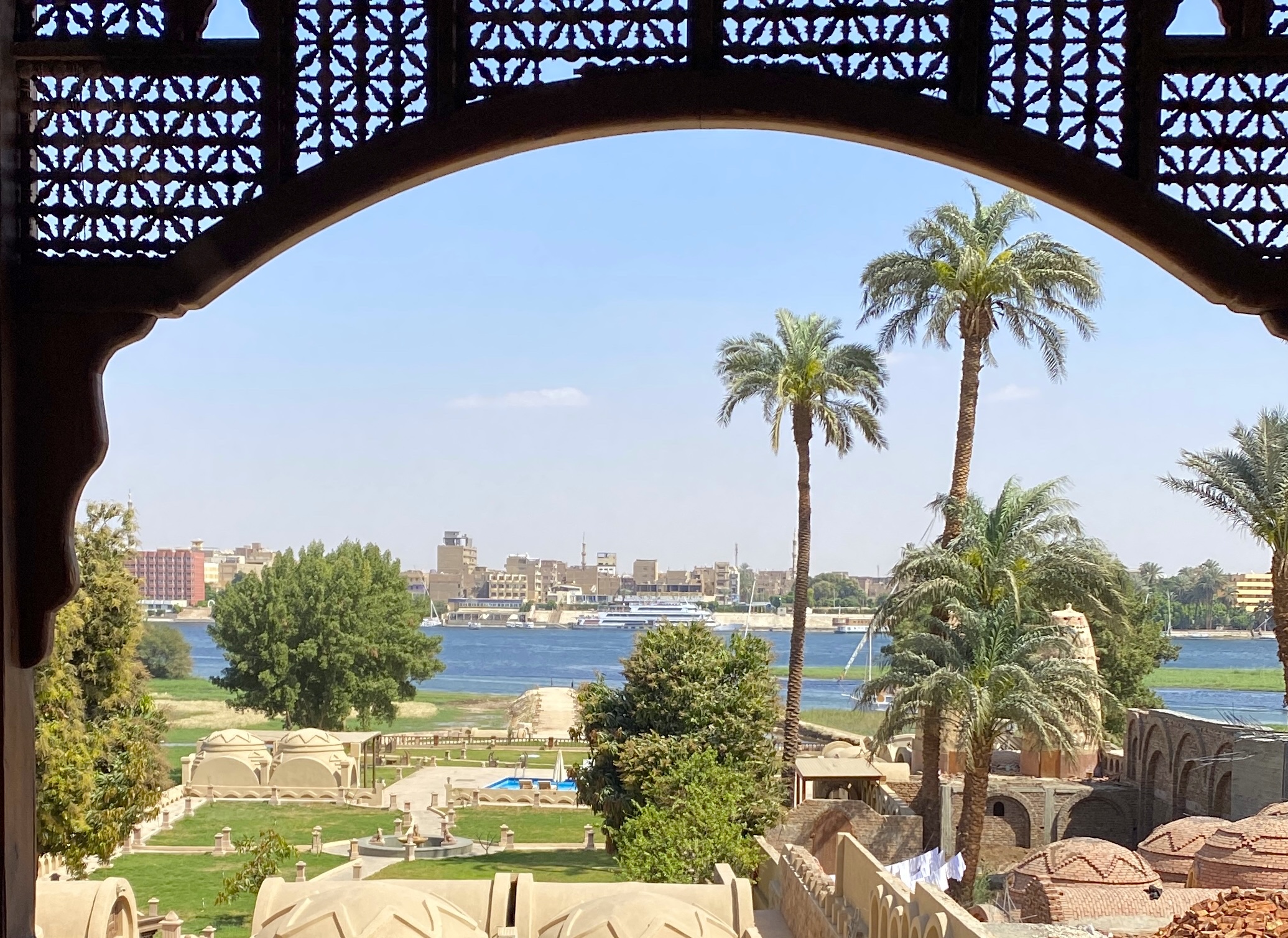
As rivals, the two banks of the Nile lead the way.
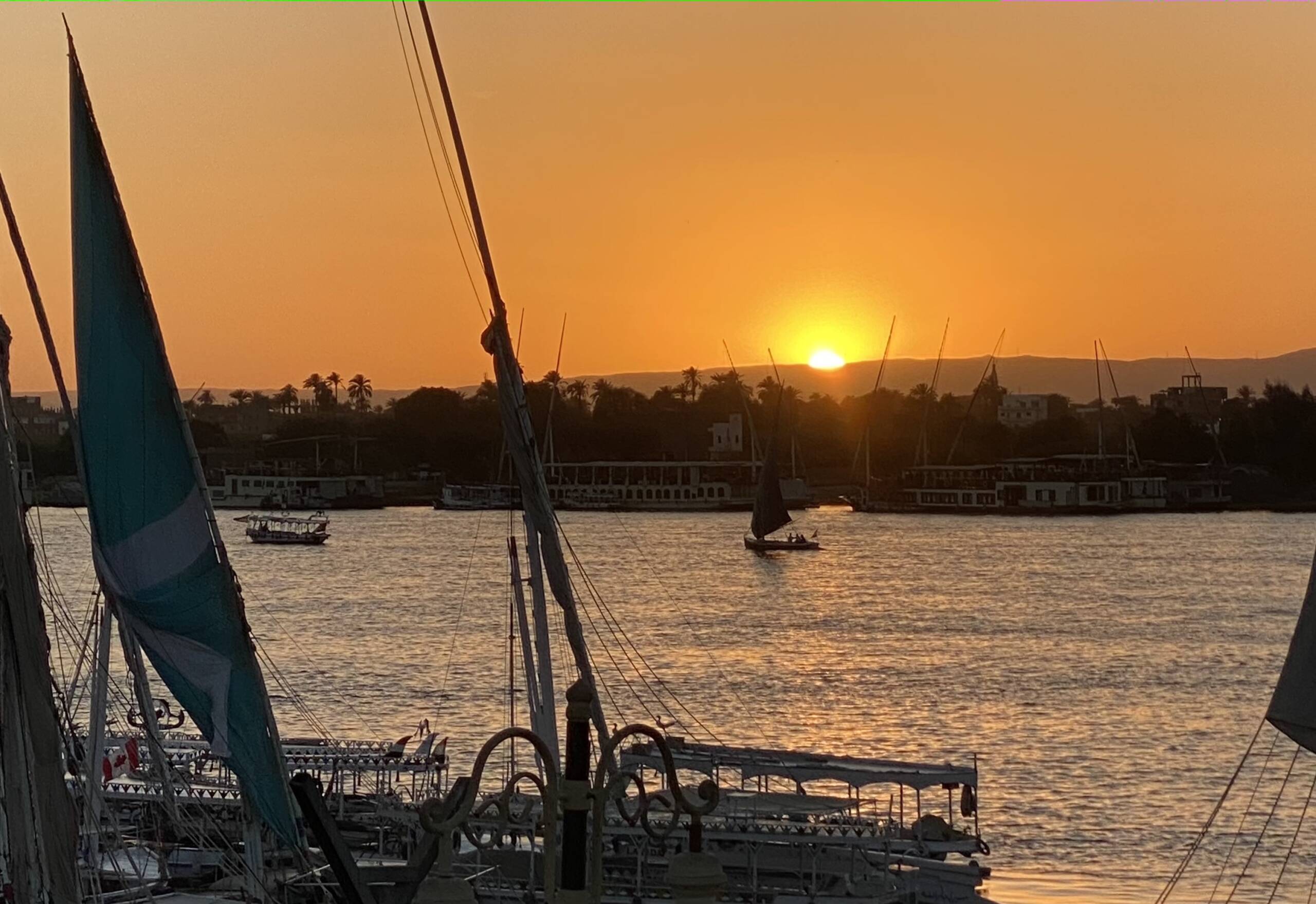
Taxi-boats and public ferries come and go from one shore to the other, cutting the graceful trajectory of feluccas gliding along with their wings to leeward. To the east, the Winter Palace, founded in 1900 by the British. It became the HQ of archaeologists such as Howard Carter, discoverer of Tutankhamen's treasure. Cruise ships are moored at the quayside, at the foot of Luxor Temple, Ramses II's former southern residence in the heart of the city... While in ancient Egypt, human life was confined to occupying the eastern bank of the Nile, today the western bank abounds with rentals for travelers who linger in guest houses or apartments with balconies overlooking the Nile. All nationalities gather around wooden tables and benches on the banks of the Nile to watch the evening lights of Luxor Temple reflected in the black water. While tourists bring a considerable windfall to this unchanging setting, behind the scenes, the little donkeys that trot along the dirt paths alongside the fields without disturbing the white ibises, remain the main means of locomotion for the vast majority of the population.
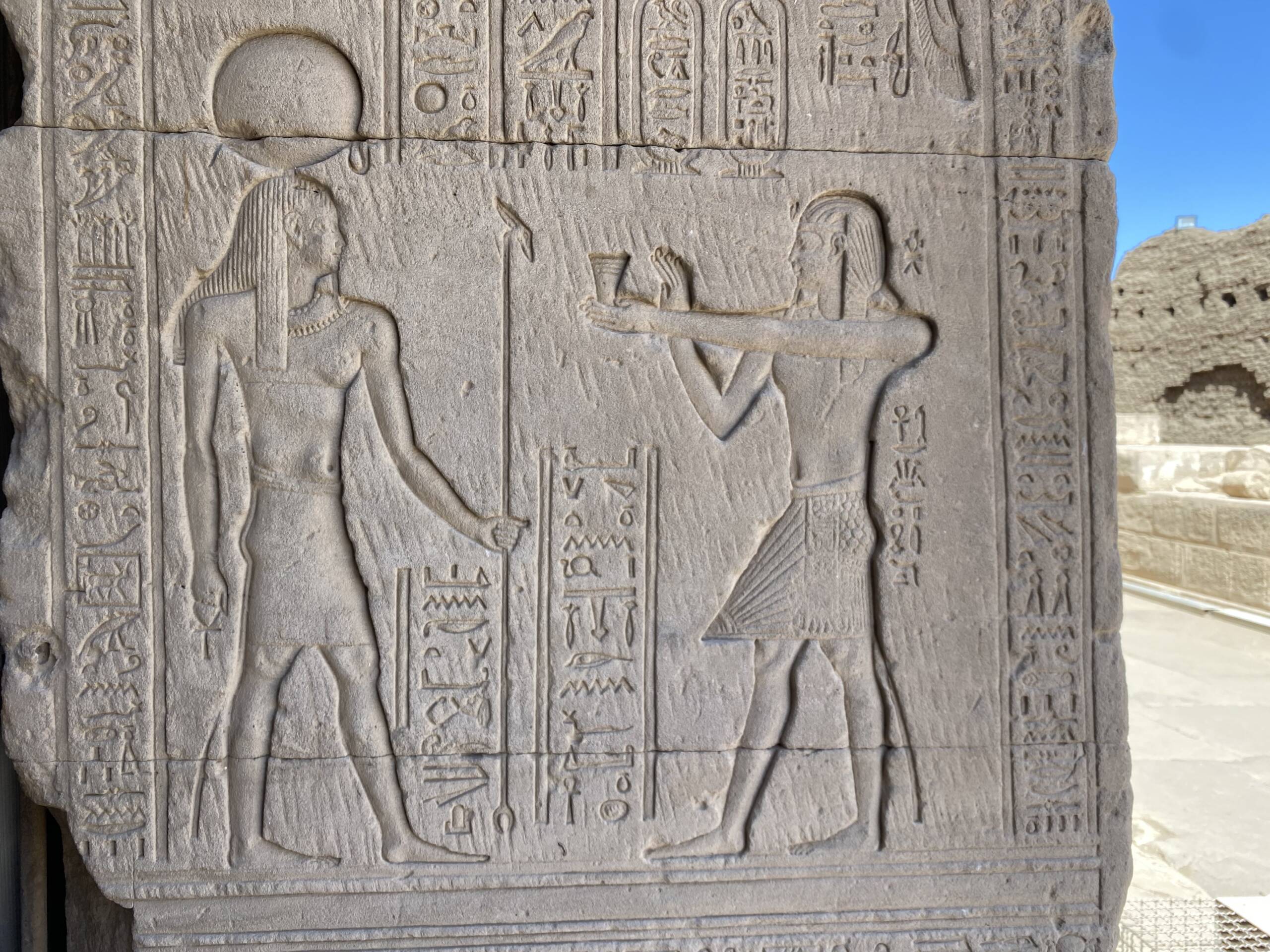
Osiris, Isis and Horus, the divine family venerated by humans
In a human life, everything tended towards maintaining the good order of the world. The offering, the performance of rituals or a task useful to the kingdom occupied the heart of existence: every day, Gods, Goddesses and their equivalent on Earth, Pharaoh, had to be fulfilled. Three main gods made up the omnipresent divine triad in the mythical story engraved on the granite or limestone walls: Osiris, Isis and Horus. Osiris, the husband, Isis the wife and Horus their son. The divine family visited each other once a year. Leaving the obscurity of the temple, to which access was reserved for the priests and the Pharaoh, each would then show the people the full splendor of his gold-covered face. Singing, dancing, drinking and feasting were all part of the celebrations, which could last an entire month. An orgy of offerings, beer, wine, honey, game, meat, fruit, bread, incense and other riches, flowed in more than ever to nourish their spirits and strengthen their Vital Force. Abundant harvests, Nature's favor and the happiness of the living depended on their contentment.
Denderah, home of Hathor
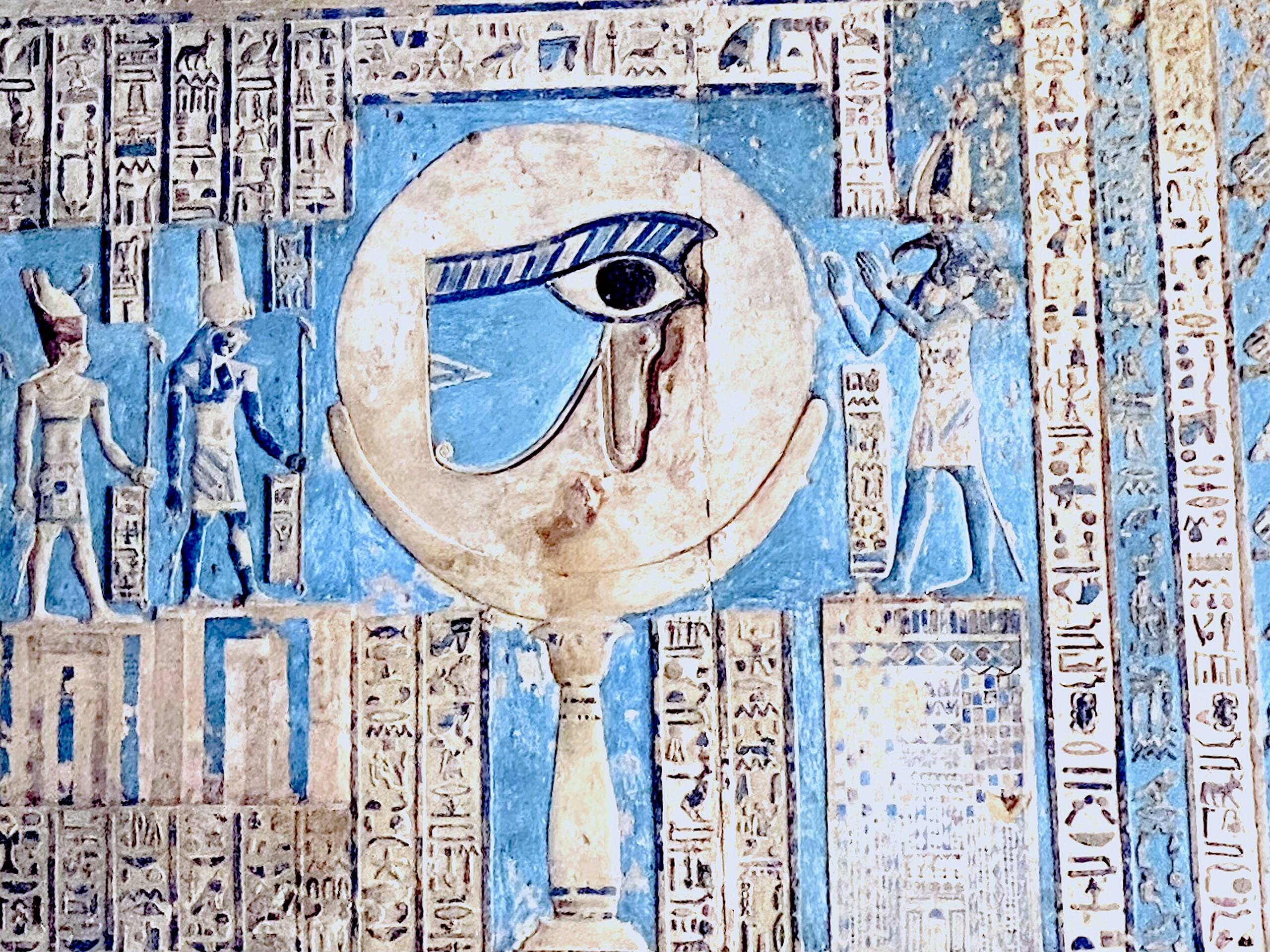
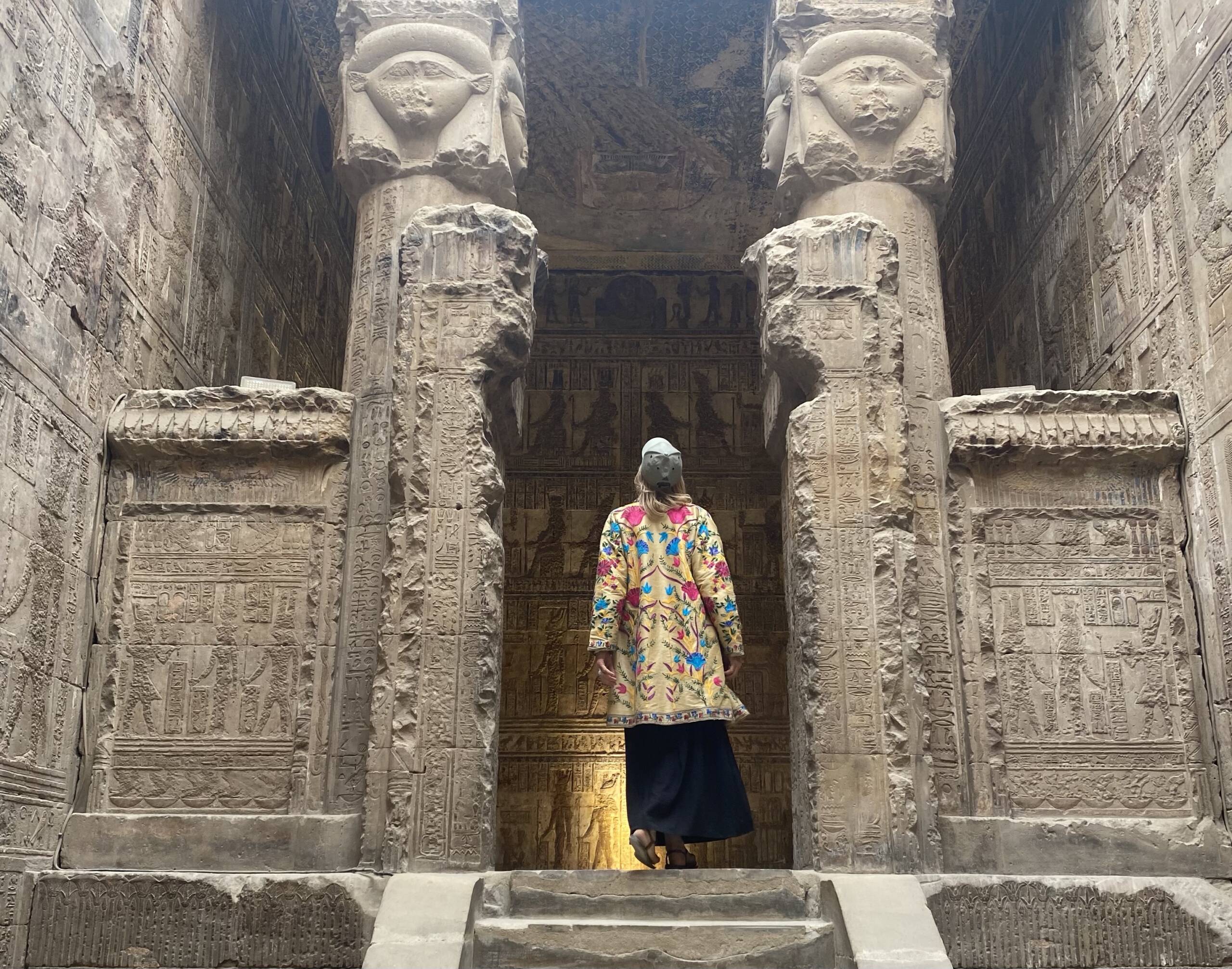
To take your time, it's best to get there early. The temple opens at 7 a.m. when the gentle rays of daylight begin to caress the stones. If you leave Luxor at 5.30 a.m., a one-and-a-half-hour drive along the Western Desert Road allows you the luxury of exploring the temple on your own, well before the tourist groups arrive. The Luxor cab will wait for you as long as it takes. Today, the goddess is you. To honor Hathor, you've put on your best clothes. The guardians will welcome you with a smile. Hathor is the cow-headed female goddess who symbolizes the Milky Way, the celestial space where the sun takes its place at creation. Hathor watches over the cosmos, whose knowledge she has passed on to mankind. Wearing two lyre-shaped horns encircling the solar disk, she is often confused with Isis, who likes to take on multiple forms. Hathor is also the goddess of love and dance, the lady of intoxication, the mistress of ballets and merry choruses. She appears as a young woman waving a sistrum, a rattle-like musical instrument whose tinkling excites the gods. She is the wife of Horus, the Falcon-headed God.
In the temple, the divine trio welcomes you
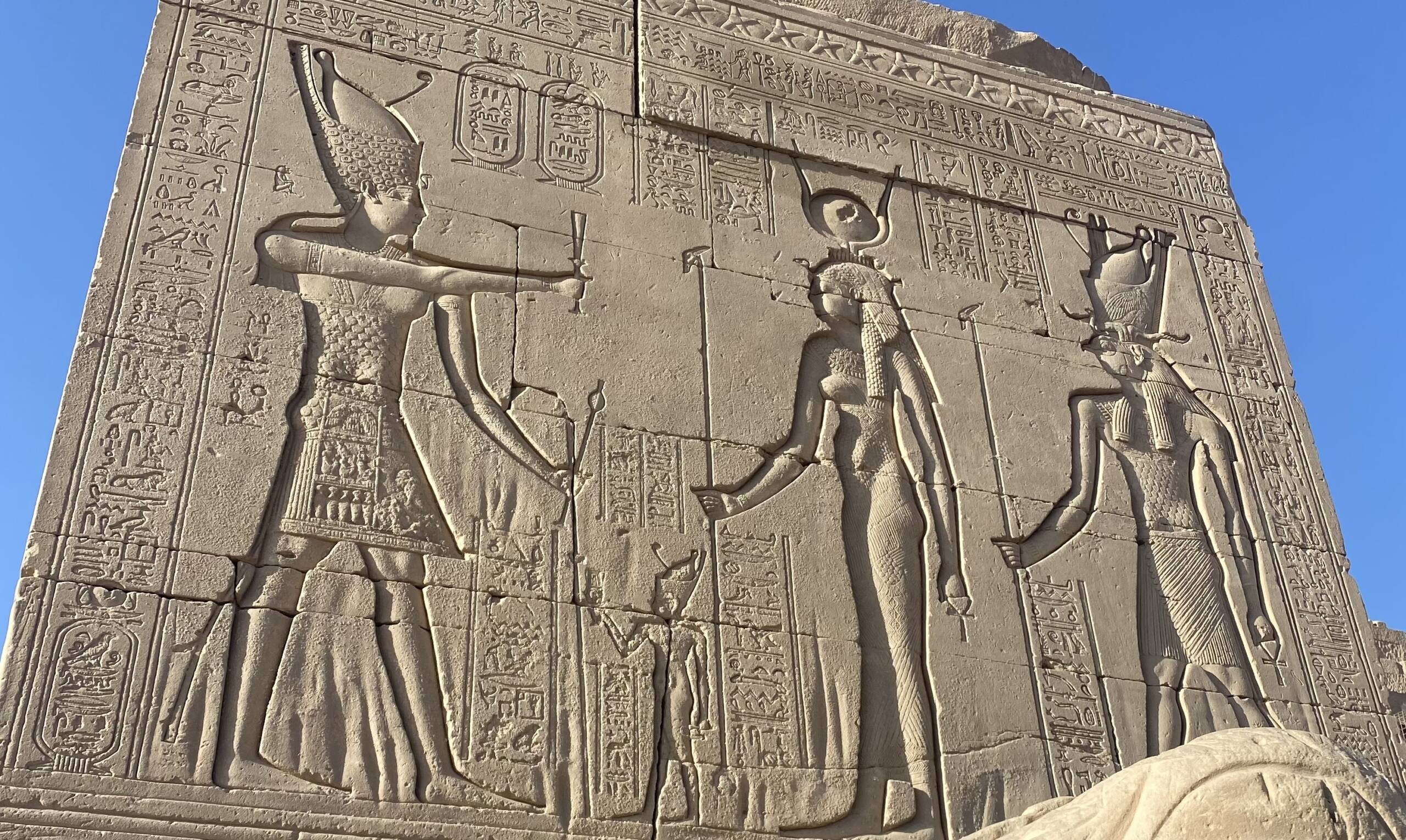
On arrival, to the left of the entrance portico, a bas-relief shows them enthroned in majesty: Osiris, master of the underworld and guarantor of human resurrection, offers wine to Hathor, wife of his son Horus, the royal child and guarantor of the continuity of Pharaonic civilization. The contours of their bodies are extremely delicate, revealed by the transparency of their clothes. Once past the porch, covered with texts indecipherable to ordinary mortals, you enter the temple courtyard, which stands at the end of the dromos, the paved driveway. The monumental façade imposes its perfection. The six columns supporting the roof reveal the face of Hathor, surmounted by a sistrum: here, sound, an accomplice of the divine spirit, permeated every nook and cranny. Entering the temple, silent and barely lit by daylight, you are astonished: on the left, twelve columns and on the right, twelve others representing the twenty-four hours of day and night. On the eighteen-metre-high ceiling, the entire astronomical science of the Pharaonic civilization is recorded, mixed with myths and symbols. The azure-blue colors are perfectly preserved, suggesting the chromatic abundance of the origins. Beyond this great hall, the pronaos, you enter the relative darkness, closer to the sanctuary where the goddess was enthroned, visible only to the priests.
Meditation in the temple
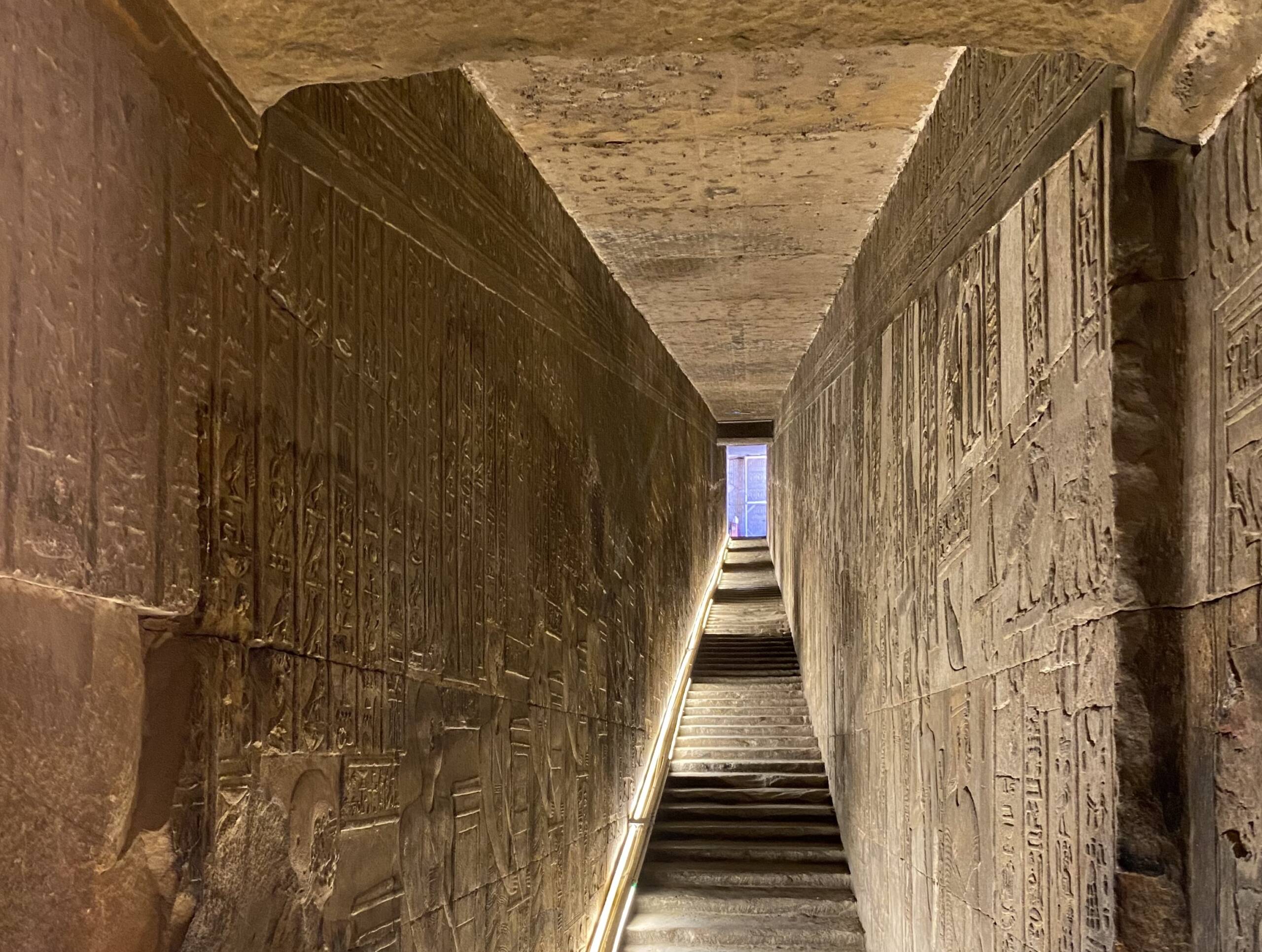
Local guides offer their services to isolated visitors. "Meditation?" he says. If you're looking for a "personalized" experience, follow him through the maze of empty rooms engraved with divine figures. At the far end of the temple is the holy of holies, the sanctuary of Hathor, where the statue of the goddess was kept. But the guide leads you down a side corridor to the sistrum chapel. Look at the bas-reliefs," he says, "they represent priestesses of Hathor playing the harp, the sistrum. This is where they played and sang the hymns celebrating the goddess". The walls are covered with silhouettes of women playing instruments, symbols and hieroglyphs, right up to the star-sprinkled ceiling. The finesse of the drawings is a marvel. A ladder gives access to a niche high up. But a chain bars access. "Do you want to go up? He checks that security isn't there and leads the way. "I'll keep an eye out... Come on up!"... And off you go for a quarter of an hour of isolation, feeling the space, the silence, filling yourself with a fluid, mysterious energy. Then it's back down to earth, and the guide takes you a little further into a succession of crypts reserved for initiations. In these narrow subterranean rooms, the temple priests performed rituals that are no longer remembered, but are described in minute detail on the walls. Before the professional guides arrive with their clusters of tourists, it's a privilege to be alone in these places.
Isium, temple of Isis
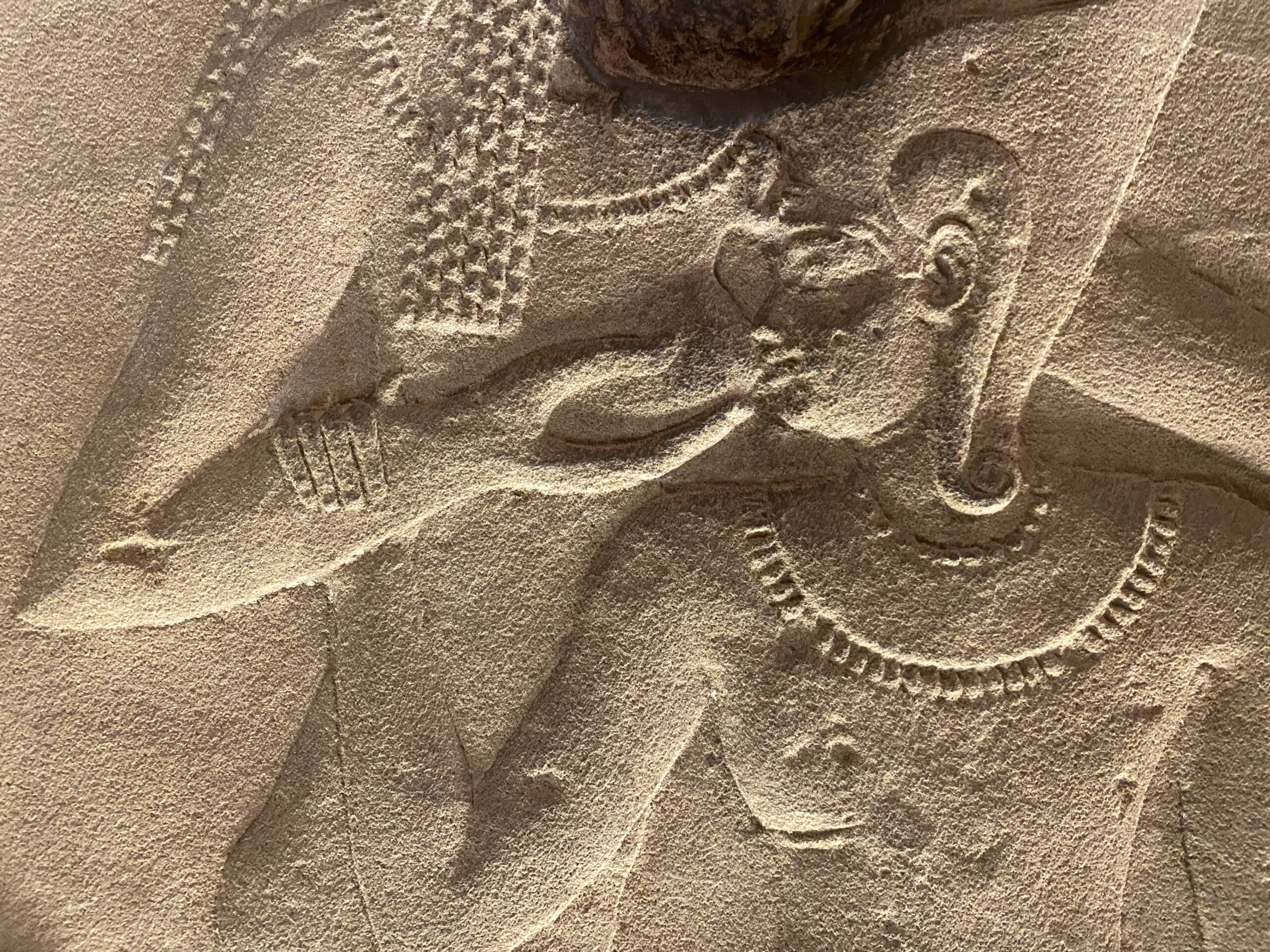
Behind the Temple of Hathor, the large south-facing wall faces a small, partly destroyed edifice: the Temple of Isis. Its construction is lost in the annals, well before that of the Temple of Hathor, built during the Ptolemaic period around 332 BC, on earlier foundations. Not only was Isis the favorite goddess of the Pharaohs, but the Greeks and Romans adopted her under the guise of Demeter or Aphrodite, erecting temples to her around the Mediterranean, making her a universal goddess, one of the most eminent figures of womanhood, initiator of the masculine. Creator, source of all life, matter and nature, she is the Redeemer, restoring life to her husband Osiris and ensuring his eternal existence in the afterlife. She is the "Savior", the absolute figure of Motherhood, and those who serve her cult are priestesses, magicians who hold the keys to healing. Their popularity is immense, making Isis the most sought-after divine figure since the beginning of Egyptian civilization, and this for thousands of years! To approach this small temple, to sit in front of the gated sanctuary, is to plunge into an energetic matrix that envelops you in its beneficent gentleness. The clue to the power of the place lies in its remains: while the rooms surrounding the holy of holies did not survive the destruction - by the early Christians - the heart of the temple, the Isium, did.
Cleopatra, worshipper of Isis.
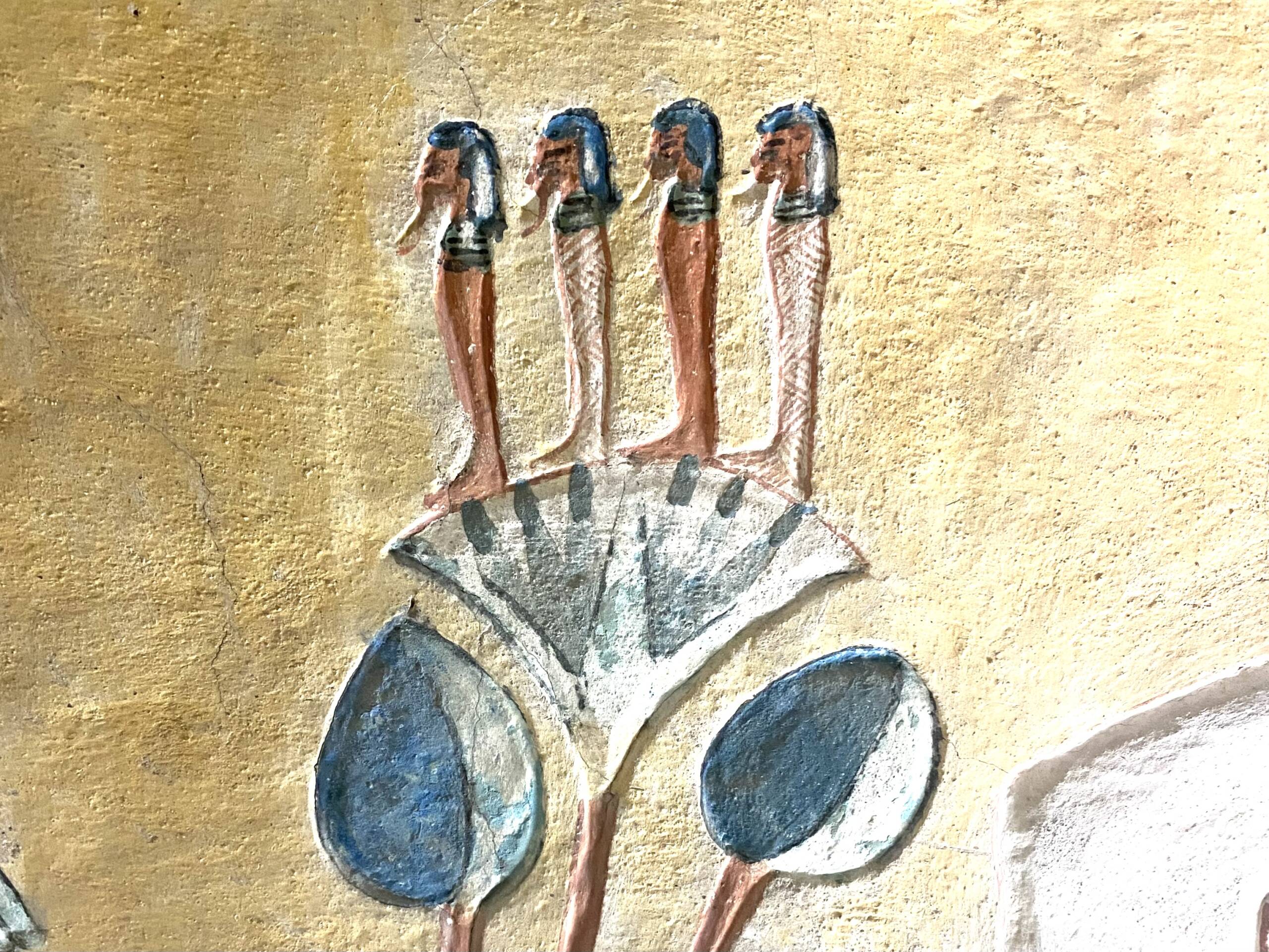
It's no coincidence that one of the few, if not the only representation of Cleopatra VII in Egypt is here, on the rear wall of the Temple of Hathor. She had her silhouette engraved, along with that of her son Cesarion, son of Caesar, the emperor of Rome making an incense offering to Hathor, standing as close as possible to the small sanctuary of Isis facing her. This bas-relief is moving because it sums up the Pharaoh's ambition to become queen of both Egypt and Rome, and above all a mother's dream of power for her child.
Abydos, Egypt's ancient holy city.
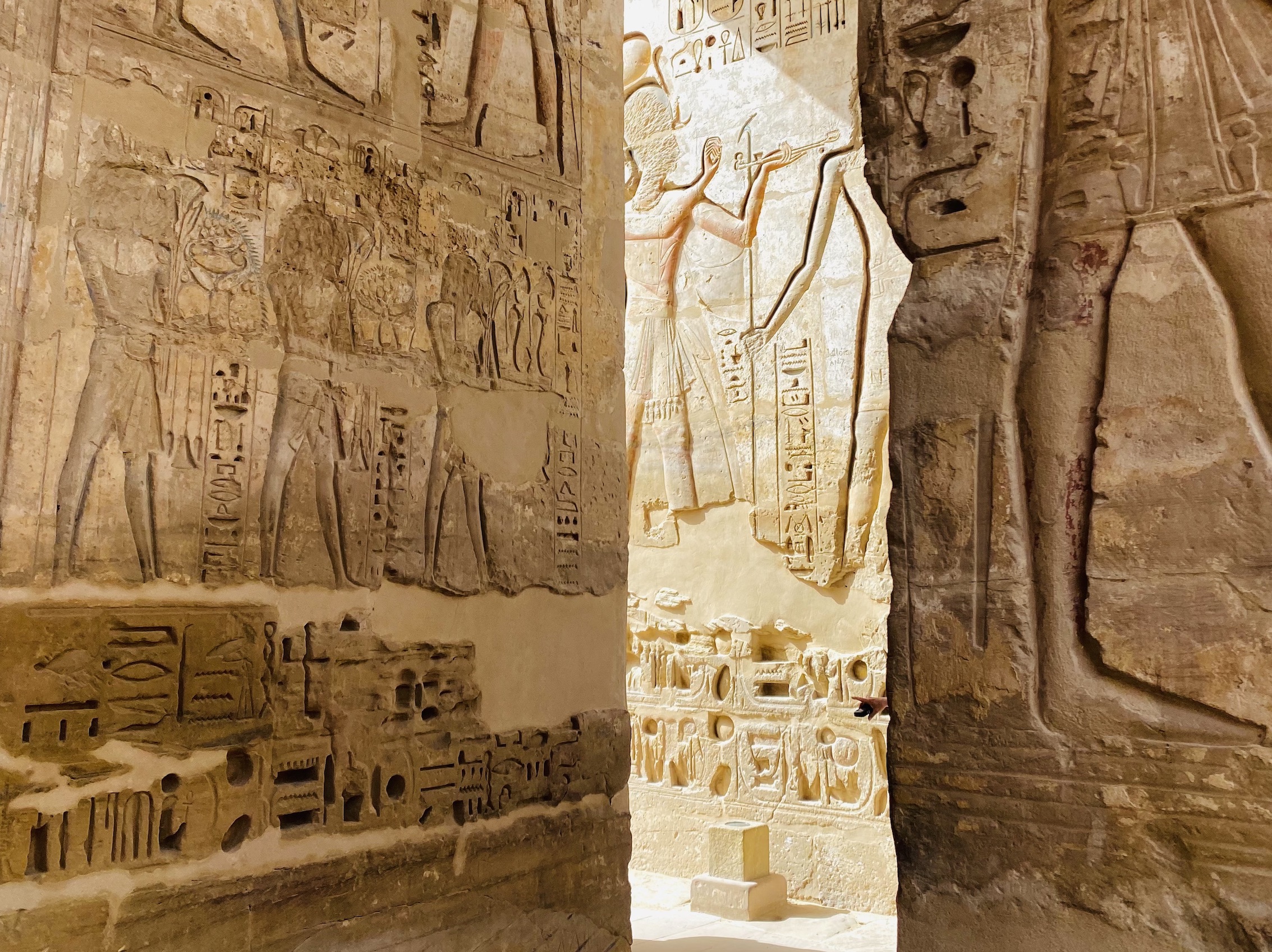
A hundred kilometers away, and a two-hour drive from Luxor, in this loop of the ancient Nile, stand the remains of the ancient holy city of Abydos. All that remains is the temple of Sety I, father of Ramses II. At first glance, its architecture seems to have sprung from the mind of a modern architect. The horizontal lines, the pillars, the straightness and purity of the lines could have come from concrete. Yet its construction dates back to around 1539 BC, over 5,000 years ago. This is where you'll find some of the finest relief figures chiselled from the purest limestone. The figures possess a respectful grace in their attitudes. King Sety I depicts himself bending towards the gods in a gesture of veneration: here, the art of relief reaches its perfection. The pharaoh had the "Tables of Abydos" engraved, a list of the seventy-six rulers who reigned until him, the second pharaoh of the 19th dynasty, of which Ramses II, his son, would be number three. Such perfection in his father could only harm his reputation: Ramses II, obsessed with his image, had the texts written on the walls of his father's temple erased. But he put so much work into the scribes that their work was of poor quality. The texts intended to erase the previous ones were dug deep into the stone, to give the new pharaoh the guarantee that they would never be erased. His standard was excess. The magnificent exhibition dedicated to him at La Villette in Paris from April 7 to September 6, 2023, consecrates the superstar he dreamed of being before the Eternal!
Valley of the Kings and Queens
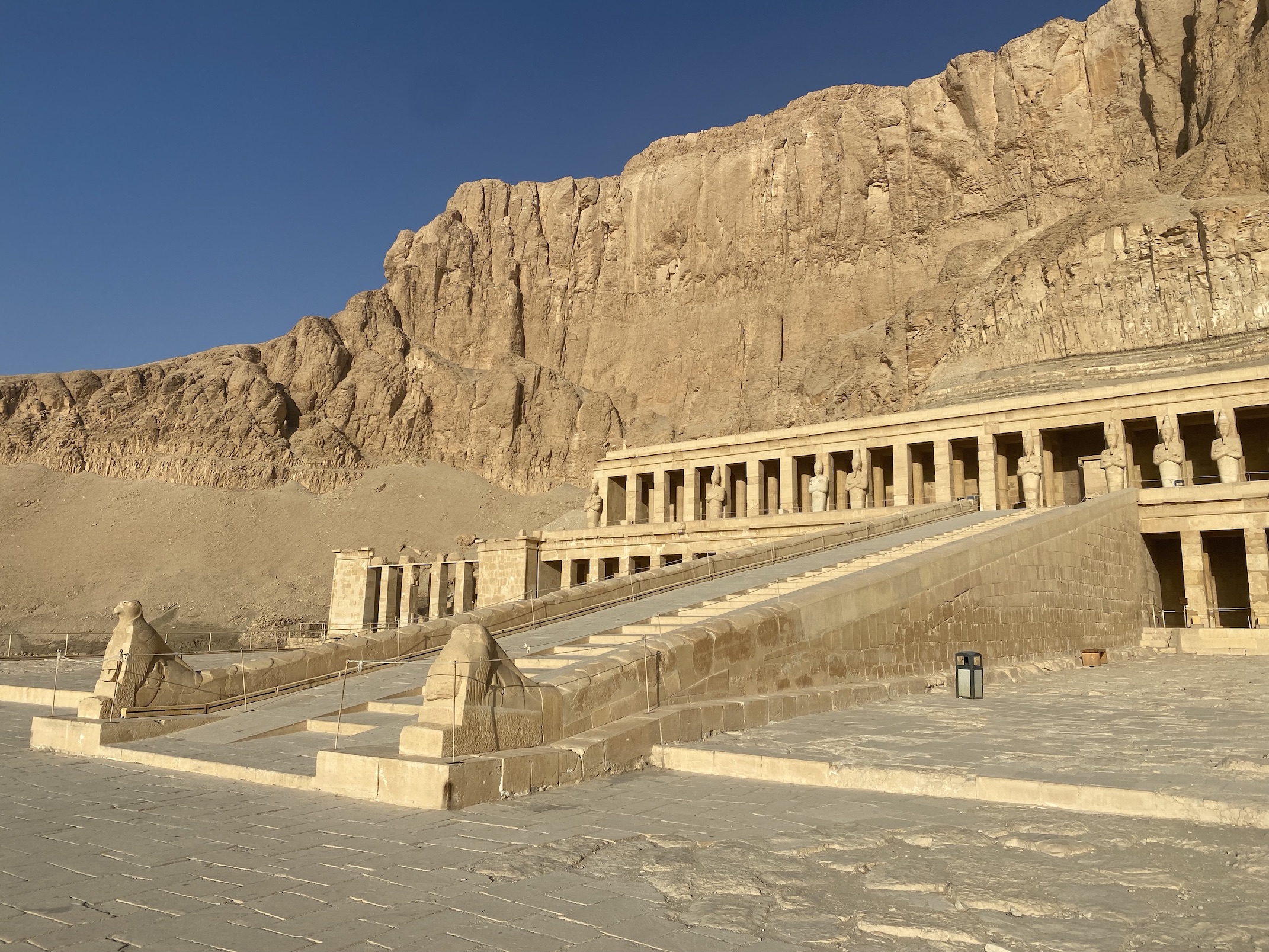
On the west bank of Luxor, you can discover the Valley of the Kings and Queens. After delving into the depths of the tombs where their mummies were deposited, to admire the brightly painted religious scenes, you can get an idea of the extent of the remains from the air by taking off early in the morning for a hot-air balloon ride. Here again, the earlier in the morning, the more magical the flight: you soar above the pink granite Colossi of Memnon. The splendour of the funerary temple of the Pharaoh Hatshepsut is revealed. The landscape expands, from the edge of the desert to the gentle flow of the Nile in its ribbon of greenery.
Around Aswan
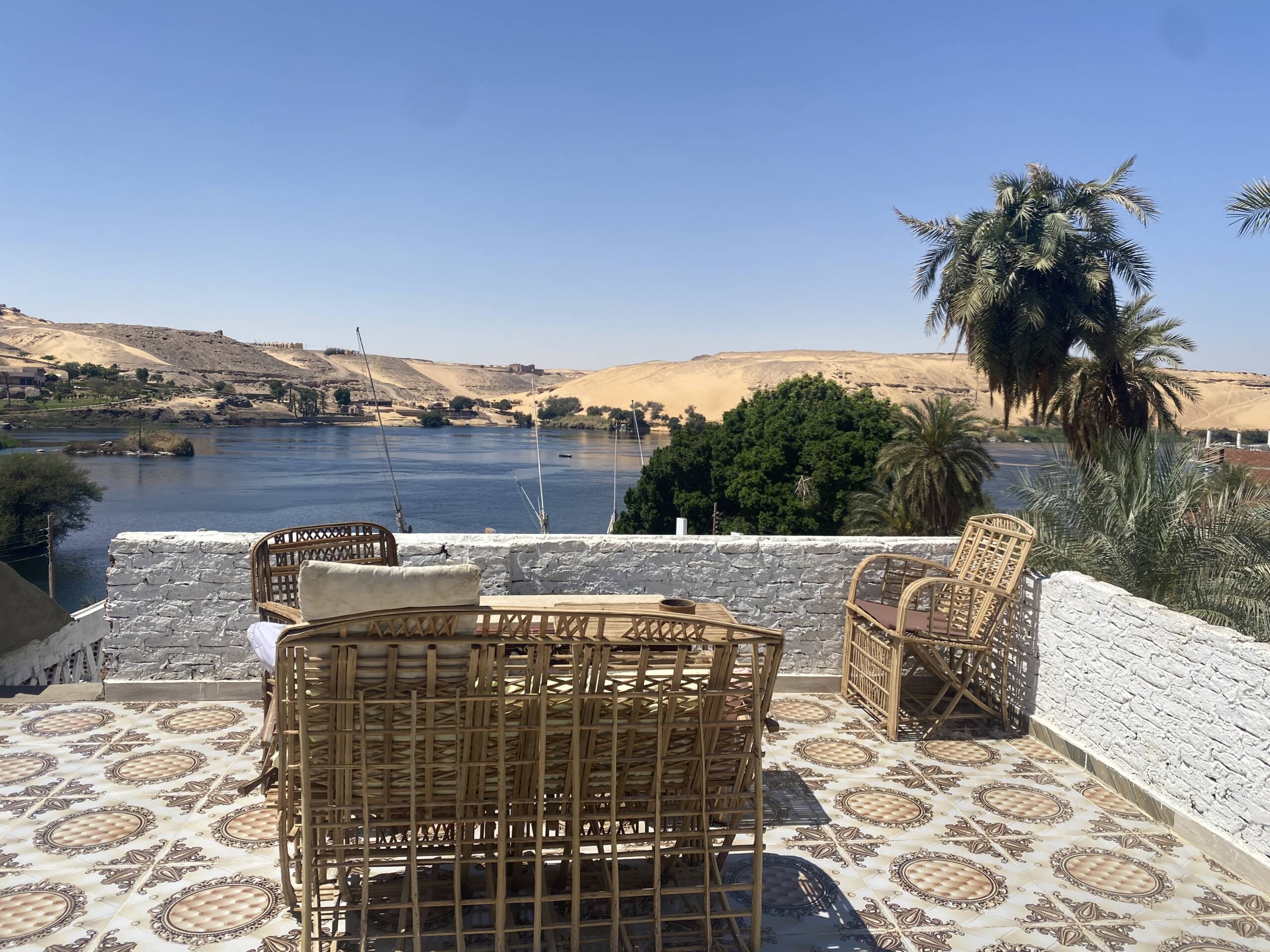
Jump on a train or sail on the Nile to reach Aswan, the last city in the south, allowing you to visit many other sites, including the most remote, 281 km to the south, on the shores of Lake Nasser: Abu Simbel. The rock temple of Ramses 2, built at the southernmost tip of Egypt in ancient Nubia, is a splendid sight: dug into the mountain, it was completely dismantled to save it from being swallowed up by the creation of the artificial lake, and rebuilt identically a little further on, but retaining its original display. In fact, the famous pharaoh, concerned with his prestige, designed the temple in a particular way: his statue, erected at the bottom of the sanctuary dug into the mountain, is lit by the sun's rays twice a year: on February 20 and October 20. The sun transmits its power to the sovereign, thus confirming his divine ascendancy.
Philae, the other wing of Isis
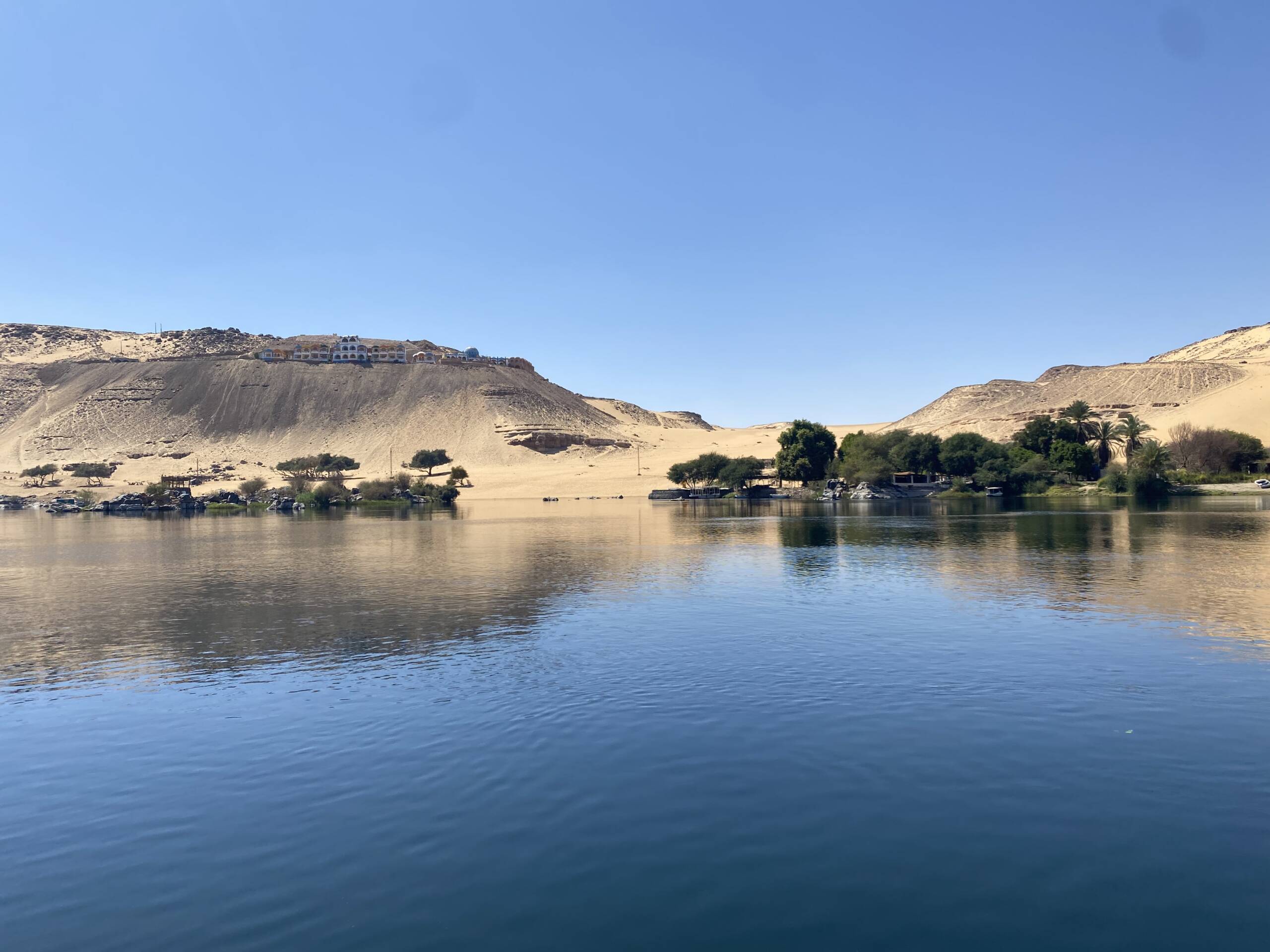
Until the end, Isis protected ancient Egypt. But it is here that her wing has folded over its mysteries forever. The temple dedicated to the universal goddess is built on an island in the middle of the Nile. It is reached by water cab, which amplifies its appearance as a bastion. The isolation of the Philae temple enabled the cult of Isis to continue when Egypt was no longer a Roman province, long after Cleopatra's demise in 30 BC: Isis, the sovereign of all gods, was loved by the Romans until the emperor Justinian closed her temple in 551 AD. The priestesses and last followers disappeared, and with them the ancient Pharaonic civilization. The temple's surroundings are magnificent: a vast terrace overlooks the river. A portico of thirty-two columns leads to the temple's monumental, gently sloping entrance. Just a stone's throw away is the temple of Imothep, the great architect of the 3rd Dynasty, responsible for the Saqqara pyramid and the invention of step pyramids as royal tombs. Inside the Temple of Isis, the sanctuary's reliefs reveal a gentle goddess, breast-feeding her son seated on her lap, in the manner of a Virgin and Child.


